From a quick scan to a routine that fits you
Six parts, from your first scan to seeing your skin change over time.
Scan your face
Fit your face in the oval and hold still. The app takes a few quick photos, not a video.
- Face a window if you can. Daylight gives the truest result.
- Take off glasses and keep hair off your forehead.
- The photos are measured in a few seconds, then deleted.
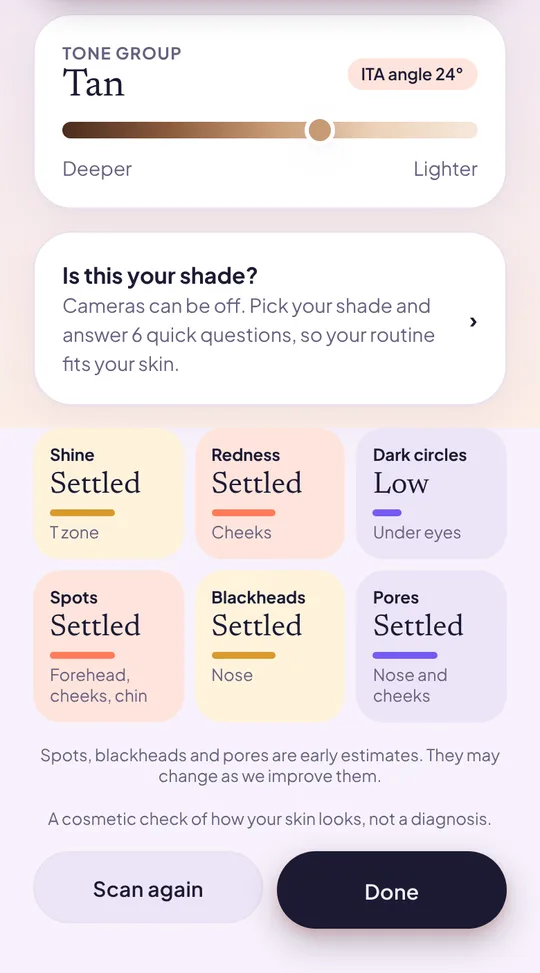
Your skin reading
Each part of your skin gets a simple level: Low, Settled or High.
- Shine, on your T zone
- Redness, on your cheeks
- Dark circles, under your eyes
- Spots, blackheads and pores, as early estimates
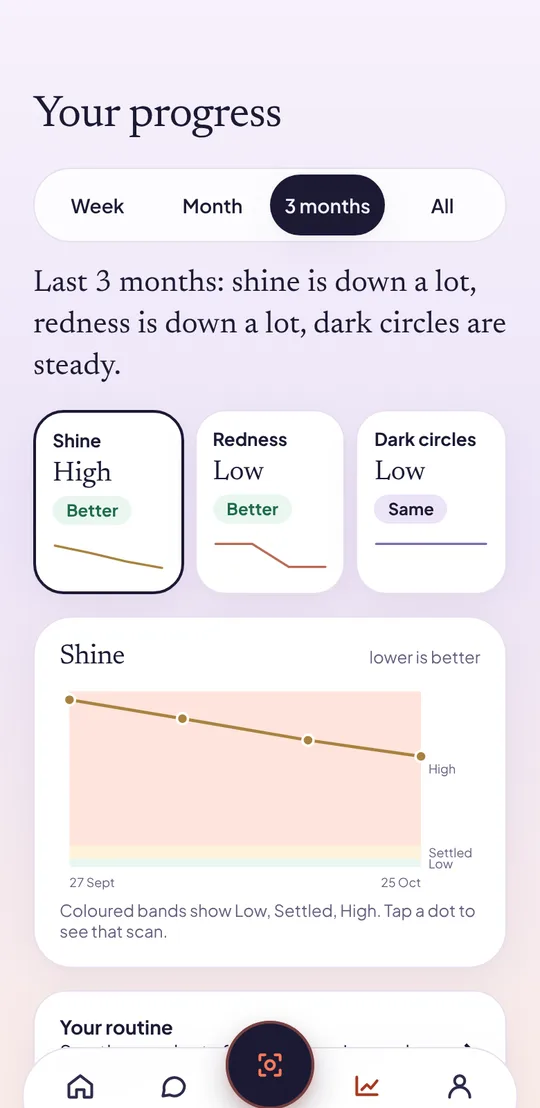
Scan again every week or two, and the Progress page shows how each one is changing.
A check of how your skin looks, not a diagnosis.
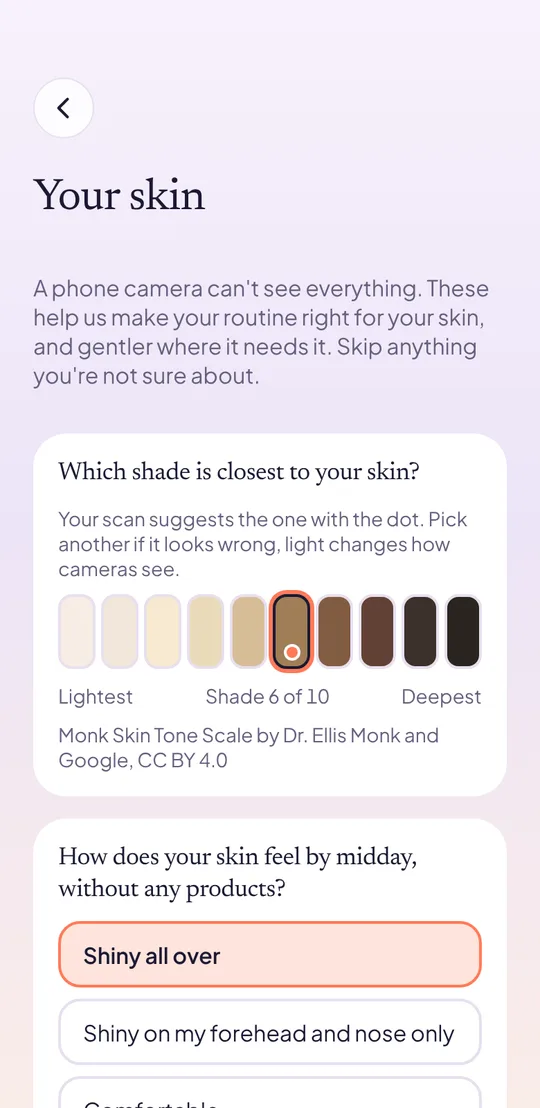
Tell us about your skin
A phone camera can't see everything. Pick your shade on the Monk skin tone scale, and answer six quick questions about how your skin behaves. Then your routine adapts:
- A gentler start for skin that's easily irritated, or tends to keep dark marks
- One new product a week if you're new to skin care, so you know what suits you
- A stronger sunscreen if your skin burns easily
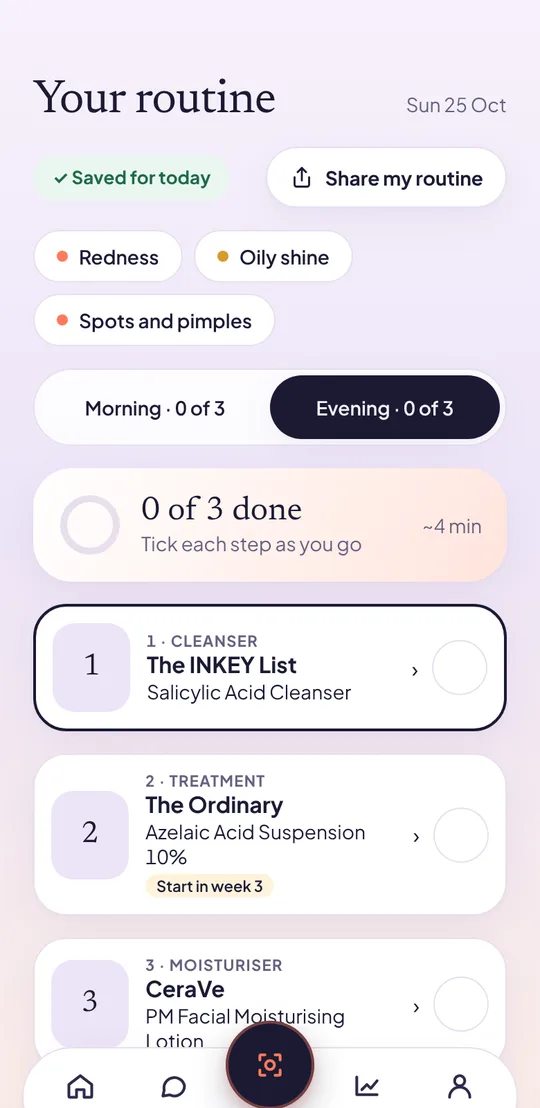
Your routine
A short morning plan and a short evening plan. Every step tells you why it's there and how to use it, and you tick it off as you go.
- Products to fit the budget you choose
- Where to buy them, including chemists near you
- Ingredients that shouldn't be used together are kept apart
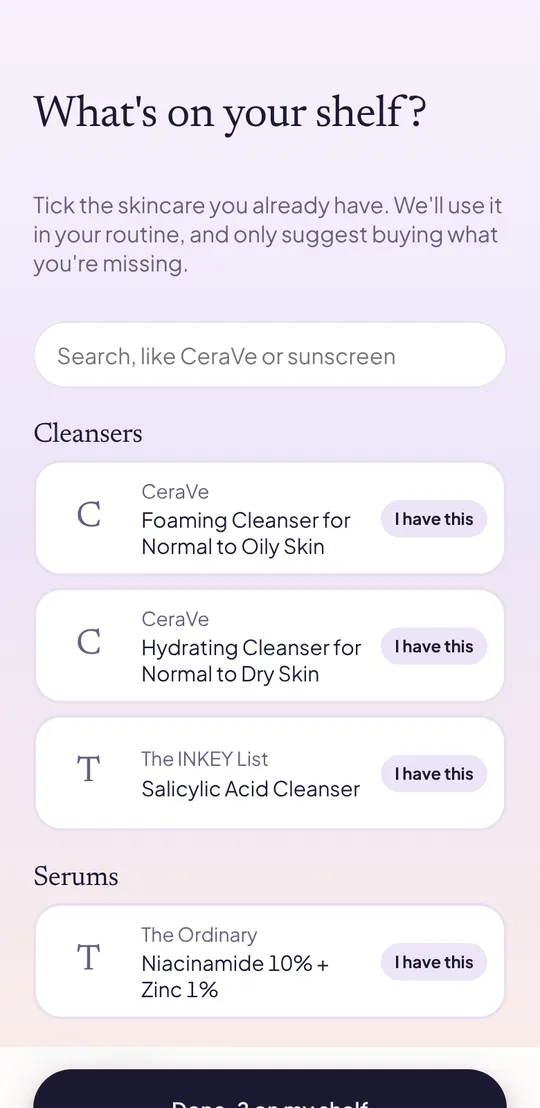
Your shelf
Tell us what you already own by ticking it, or by scanning the barcode. Your routine uses your own products first, so you only buy what's missing.
The skin coach
Ask a question any time, like "What order do I put things on at night?" The coach knows your routine and your last scan, and its answers are written and checked by our team.
Need a real person? Contact us.

What Dermata is not
Dermata is not a doctor and doesn't diagnose anything. It describes how your skin looks and suggests everyday skin care. If a spot is painful, bleeding, spreading or changing fast, or anything worries you, please see a GP, a pharmacist or a dermatologist.